GUIDES · THE GEOMETRY
Golden ratio overlays and grids: free templates, drawn exactly.
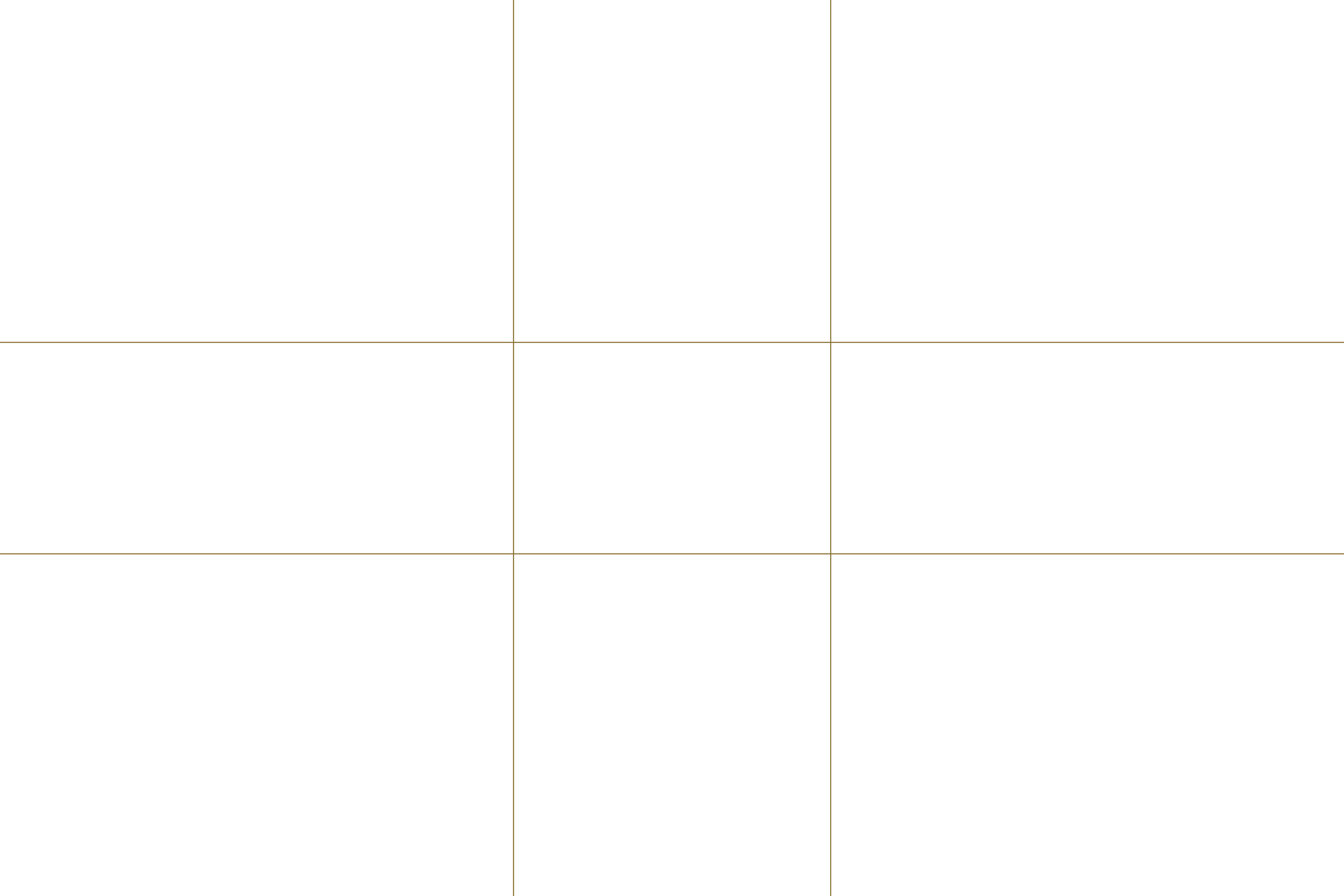
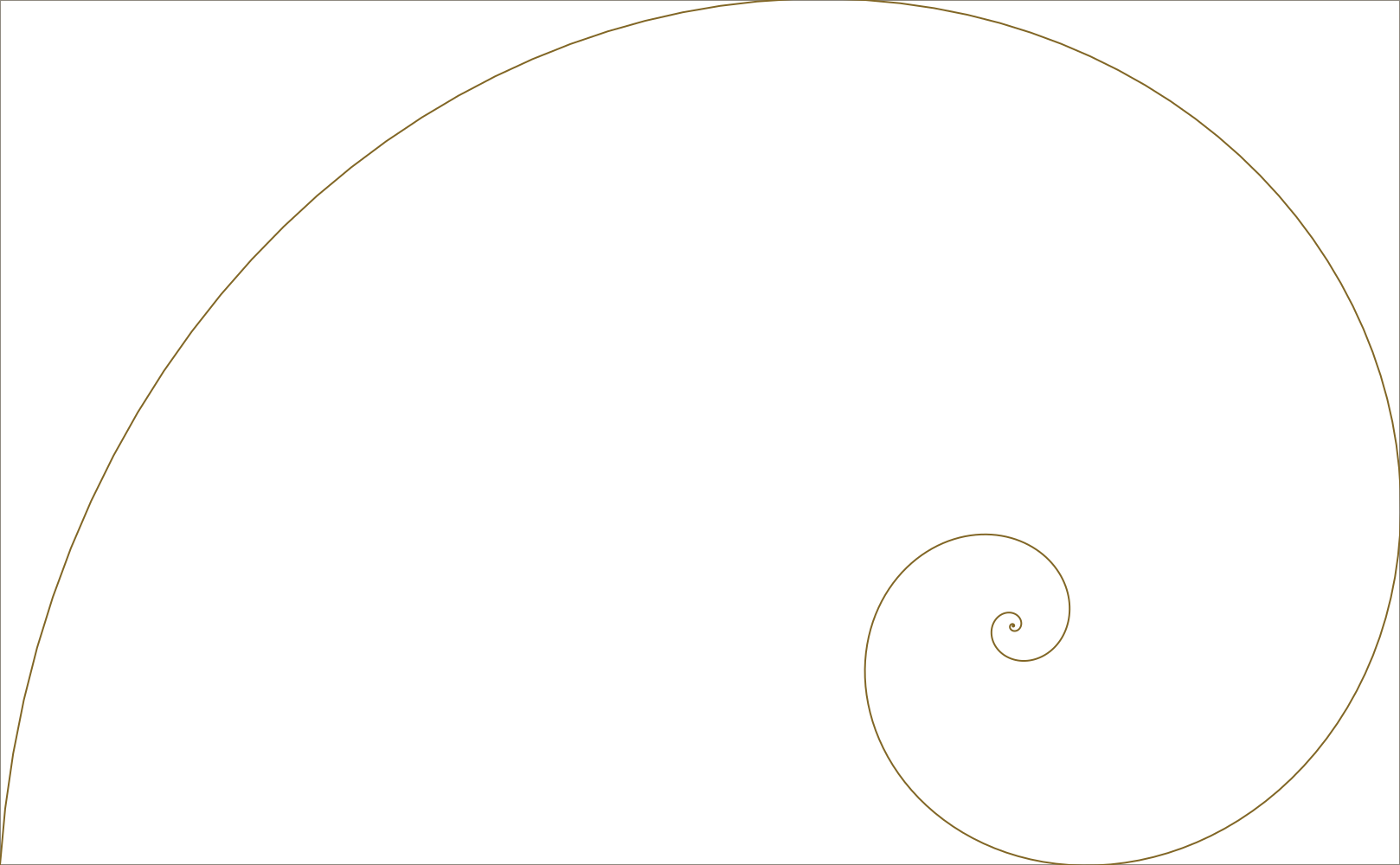
A phi grid, a true golden spiral in four orientations, the grid beside the rule of thirds, and a golden rectangle to print and cut. Transparent PNG, SVG and PDF, plotted from the number rather than traced from a book. Use them, print them, lay them over your own photographs.
Download everything (zip, 250 KB)
How to use an overlay honestly
An overlay is a question, not an answer. Lay the phi grid over a photograph and ask whether the subject sits near a line or a crossing. If it does, the composition already has a resting point; if it does not, moving the crop until it does will usually help. What an overlay cannot do is prove that a famous picture was “designed on the golden ratio”. Any spiral can be dragged until it touches something, and most of the diagrams that circulate online are exactly that — a curve pulled over a painting until it lands.
The spiral file comes in four orientations because the curve has a direction. Try all four before deciding that a picture fits; if only one does, that is a coincidence worth using, not a law worth quoting. And use the grid more than the spiral. The grid asks a fair question of every picture; the spiral asks a leading one.
What is in the files
| File | Pixels | Ratio | Use |
|---|---|---|---|
| phi-grid-3x2.png | 6000 × 4000 | 3 : 2 | Full-frame photographs, landscape prints |
| phi-grid-4x5.png | 4800 × 6000 | 4 : 5 | Portrait prints, the RAGANA works, Instagram portrait |
| phi-grid-1x1.png | 5000 × 5000 | 1 : 1 | Square crops |
| golden-spiral-a … d.svg / .png | vector · 6000 px | 1 : 1.618 | Any size, four orientations |
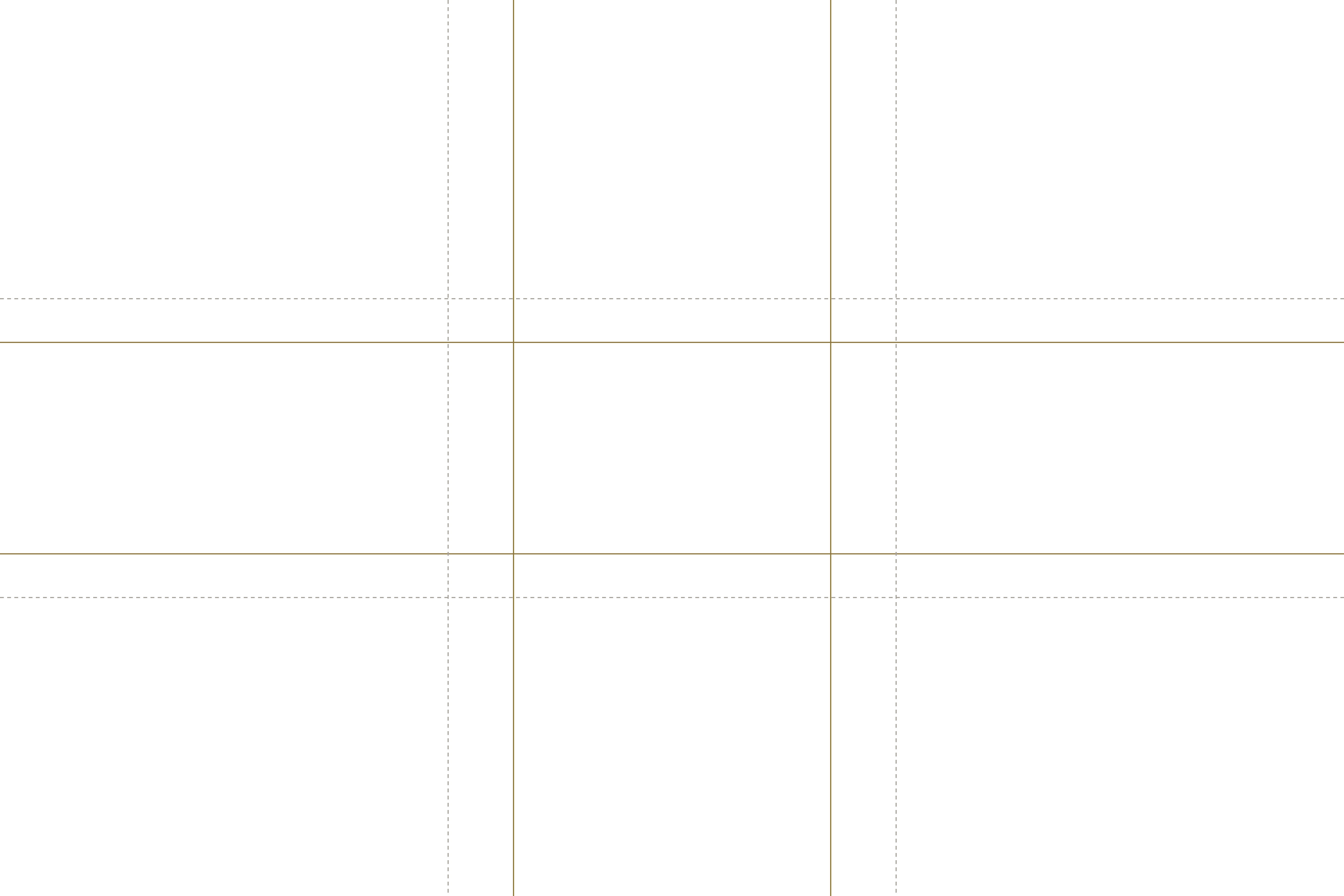
| phi-grid-vs-thirds-3x2.png | 6000 × 4000 | 3 : 2 | Seeing the two grids disagree |
| golden-rectangle-and-grid-sheets.pdf | A4 · A3 | 1 : 1.618 | Print, cut, hold up to a wall |
The PNGs are transparent, so they drop straight onto a photograph as a layer; set the layer to 30–50 % opacity and it stays out of the way. The SVGs scale to any size without softening and open in Illustrator, Affinity, Figma and Inkscape. The PDF is for the tape-measure end of the job: print the rectangle at A4, cut it out, and hold it against a wall or a frame to see what 1 : 1.618 looks like in the room before anything is bought.
How the grid is drawn
A phi grid divides each side of the frame at 38.2 % and 61.8 % — the two golden sections of the width and of the height. The rule of thirds divides at 33.3 % and 66.7 %. The difference is 4.9 % of the frame on each side, which is small enough that people sometimes claim the two are the same thing and large enough that they are not: on a 60 cm print it is three centimetres, and a subject that sits on the phi line sits noticeably nearer the centre than one on the thirds. The sheet with both grids exists so you can see this rather than take it from me.
The spiral is the calculated one, not the compass one. A “golden spiral” drawn from quarter circles in Fibonacci squares has seams at every square edge; the one in these files is the logarithmic curve r = a·φ^(2θ/π), plotted from the pole of the golden rectangle, which is why it touches all four sides of the frame and has no seams. Golden spiral vs Fibonacci spiral draws the two side by side and measures the gap.
Licence
The files are free for personal and commercial use — over your own photographs, in a client presentation, in a classroom, on a wall. Please do not resell the files themselves or present them as your own template pack. A link back to this page is appreciated and never required. If you improve them, tell me; I would like to see it.


Questions
Are the overlays free to use commercially?
Yes. Use them over your own work, in client presentations, in teaching and in print. The only thing not allowed is reselling the files themselves or repackaging them as a template product.
Which format should I download?
PNG if you want to drop a layer onto a photograph in Lightroom, Photoshop or a phone app. SVG if you work in Illustrator, Affinity, Figma or Inkscape and want it at any size. PDF if you want to print the golden rectangle and hold it up to a wall.
Is the phi grid the same as the rule of thirds?
No. The phi grid divides the frame at 38.2 % and 61.8 %; the rule of thirds at 33.3 % and 66.7 %. The phi lines sit 4.9 % of the frame nearer the centre. The sheet with both grids shows the difference directly.
Is the spiral in the files a Fibonacci spiral?
No — it is a true golden spiral, the logarithmic curve, plotted from the formula. It has no seams and touches all four sides of its 1 : 1.618 frame. A Fibonacci spiral is a quarter-circle approximation of it.
How do I put an overlay on a photo on my phone?
Most editing apps (Snapseed, Lightroom mobile, Photoshop Express) accept a second image as a layer; add the PNG, set it to “multiply” or lower its opacity to about 40 %, and align its edges with the frame. Some cameras also offer a golden-ratio grid in their display settings.
The same geometry, on a wall.
Every RAGANA work is drawn on the grid you just downloaded. Forty-four works, printable at full resolution from €34.
See the works