JOURNAL · SLOW LIVING
Wall art for slow living: a room that keeps the noise out.
A wall is the largest surface you look at without meaning to. Choosing what is on it is choosing what your evenings feel like.
Raul Gabriel Nagy · 24 September 2026 · 6 min read
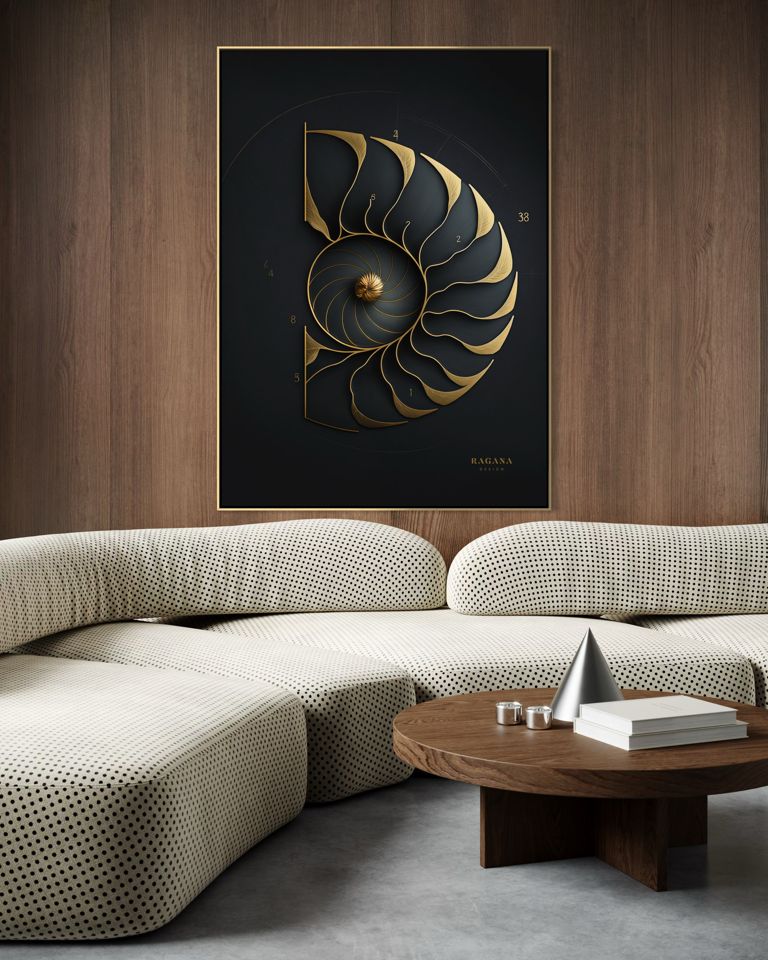
Slow living is mostly subtraction. The wall is where most people forget to subtract.
Everything else in a slow room is chosen for how it lets you stop: the chair you can sit in for an hour, the lamp that pools rather than floods, the one book on the table. Then the wall gets whatever was there — a print bought in a hurry, a cluster of frames, a mirror that doubles the room and the noise in it. The wall is the largest single surface in the room and the one you look at most, because you look at it without meaning to, every time your eyes come up from the page or the cup.
So the wall deserves the same subtraction. One work. One subject. A ground that is either darker than the wall or almost the same as it. And a proportion the eye can resolve at a glance, so that every one of those unmeaning looks lands somewhere and is let go.
Three rooms, three answers
The living room takes the darkest work you own. A navy or charcoal ground above a pale sofa reads as depth, not gloom, and gives the room a far wall to rest against in the evening. Nautilus Prime and The Golden Nautilus II are the two I hang most often here; both are a single curve on a dark ground, nothing else.
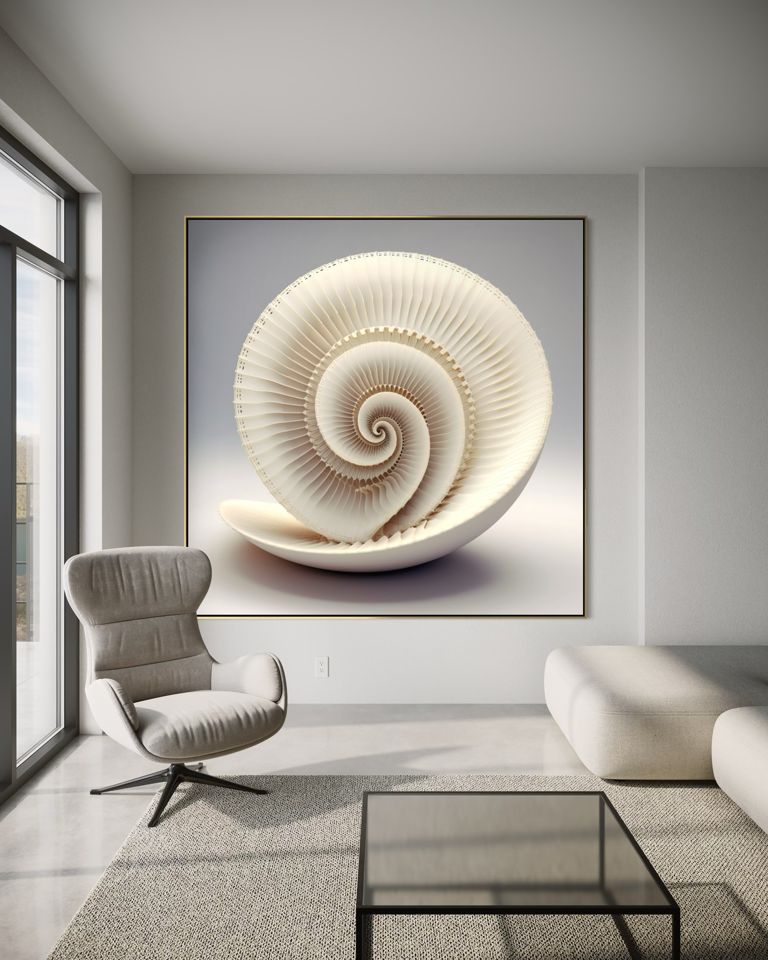
The bedroom takes the palest. Ivory on ivory, the shell drawn a tone deeper than the ground, hung low over the bed so it is seen lying down. The Ivory Nautilus Minimalist was made for exactly this: it is almost not there in daylight and entirely there at night with one lamp on.
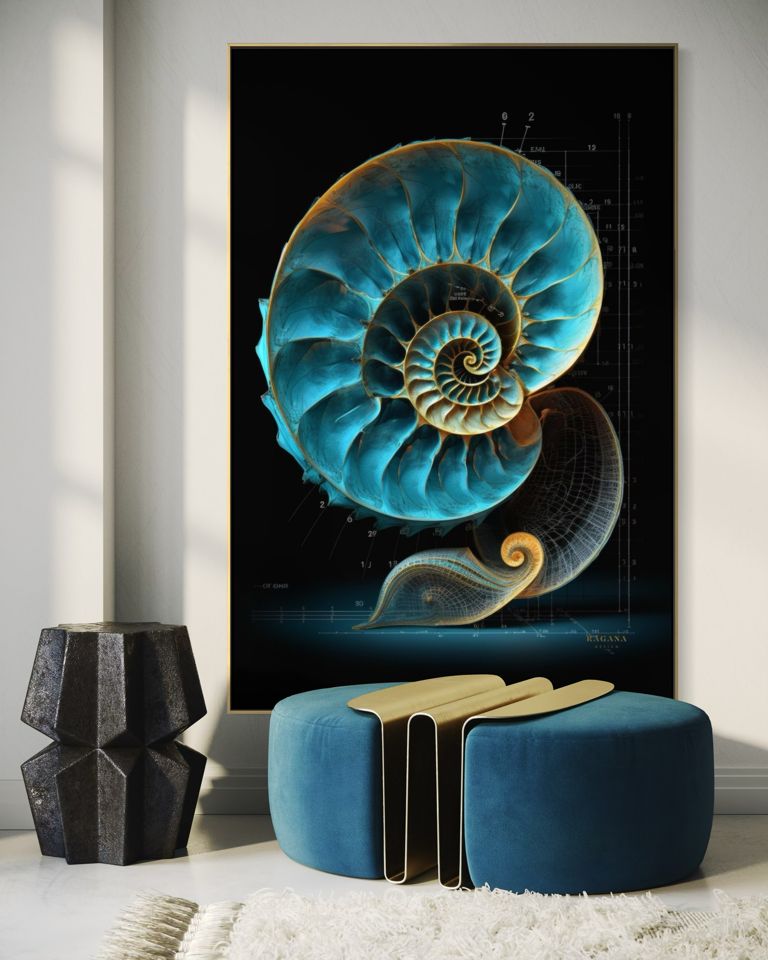
The reading corner takes something with a little more colour, because a reading corner is used awake. The Luminescent Nautilus in turquoise and gold, hung beside the chair rather than above it, so it sits at the edge of vision while you read and only becomes the subject when you look up.
The one rule
Hang it lower than you think. Slow rooms are used sitting and lying down, and a work hung for a standing viewer is a work you will never quite see from the chair. Centre of the work at 135 cm from the floor in a lounge, 120 cm above a bed. The size guide has the widths; this note is about what the wall is for.
A slow room is not a room with less in it. It is a room where everything in it has already been decided.
From the studio notes


For a wall you're responsible for.
Tell me the room and what you want it to feel like. I will send three works that fit, and a mock-up of each one in place.
Write to me