JOURNAL · EVENING
How to set up a wall you can switch off in front of.
Not a wall to be impressed by. A wall to sit under at nine in the evening with the lamp on, that asks nothing. Five decisions, in order.
Raul Gabriel Nagy · 24 September 2026 · 6 min read
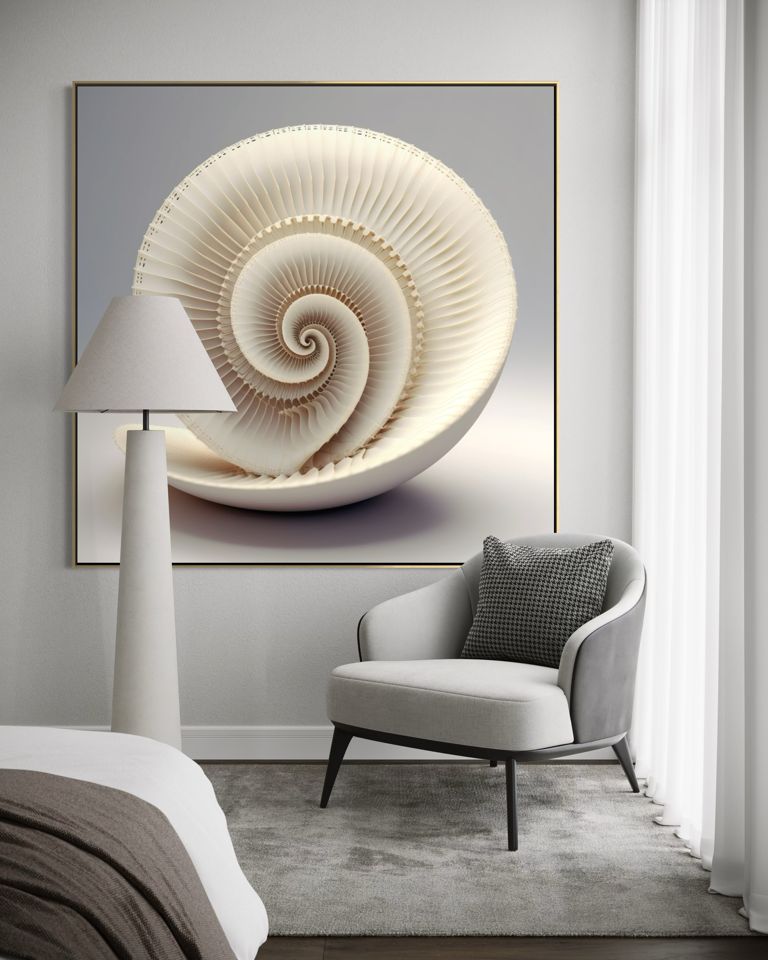
The wall you switch off in front of is the one you never look at on purpose. Set it up for the looks you do not mean.
Every other wall in a home is looked at deliberately: the one behind the dining table, the one a guest sees from the door. The wall behind the evening chair is different. Nobody looks at it on purpose. It is seen a hundred times a night at the edge of vision, between paragraphs, while the kettle boils, and each of those unmeaning looks either lands on something resolved or on something that asks a small question. A hundred small questions is what a tiring evening is made of. Here are the five decisions that remove them, in the order they should be made.
1. The ground
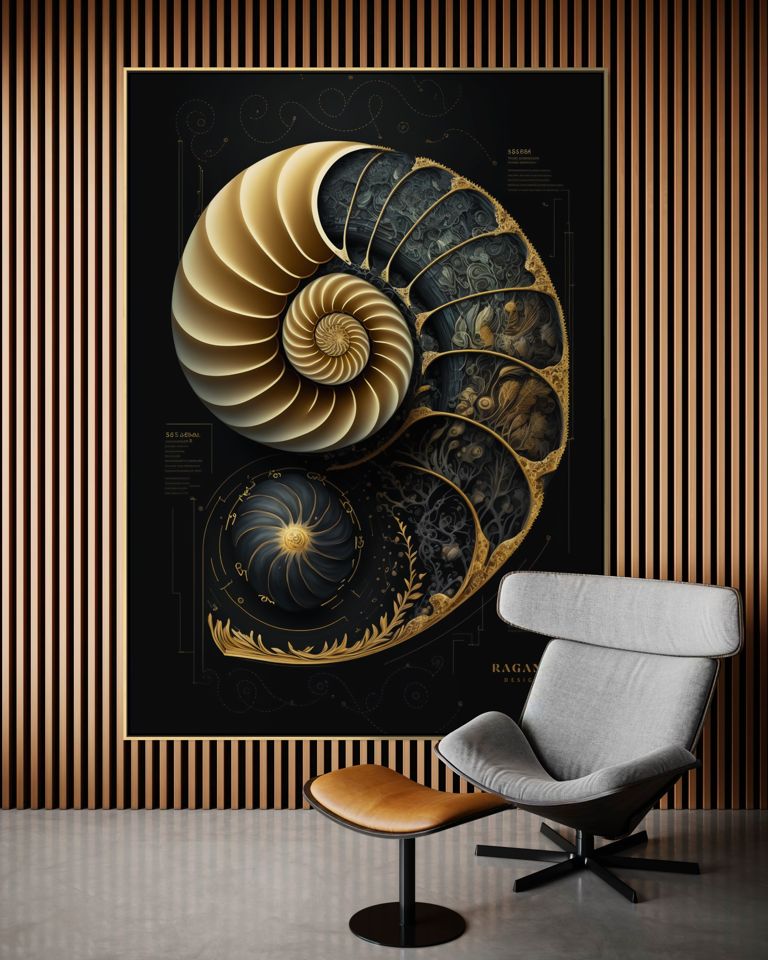
Decide first whether the work will be darker than the wall or almost the same as it. Darker — navy, charcoal, black — for a living room, where the work becomes the far wall the room rests against. Almost the same — ivory on ivory — for a bedroom, where anything darker than the wall would be the only thing in the room at night. Never in between: a mid-tone work on a mid-tone wall is a question.
2. The subject
One. A single curve, a single shell, a single instrument drawn as a line. Not a pair, not a triptych, not a gallery. The works that do this best on this site are the ones with the most empty surface: Ivory Nautilus Minimalist, The Golden Nautilus II, The Celestial Navigator.
3. The distance
Hang it where it is seen from the chair at the edge of vision — beside or slightly above, not straight ahead. Straight ahead is for a wall you look at on purpose. From the chair, the centre of the work should be roughly a metre to the side of where your eyes rest, or above and to the side. A work seen at the edge of vision is resolved without being examined, which is exactly the job.
4. The height
Lower than for a standing viewer. Centre of the work at 135 cm from the floor if it is seen from a chair; 120 cm if from a bed; 20 to 25 cm above the top of the sofa or the headboard if it hangs directly over one. The hanging guide has the reasoning and the diagram.
5. The light
One lamp, to the side, at the height of the work or a little below. Not a ceiling spot. The work should be found by the lamp in the evening and half-disappear by day. If the gold line on it catches, the light is right; if the whole surface is evenly lit, move the lamp.
That is the whole setup. It costs one decision per line above, and it saves a hundred a night.
A hundred small questions is what a tiring evening is made of.
From the studio notes
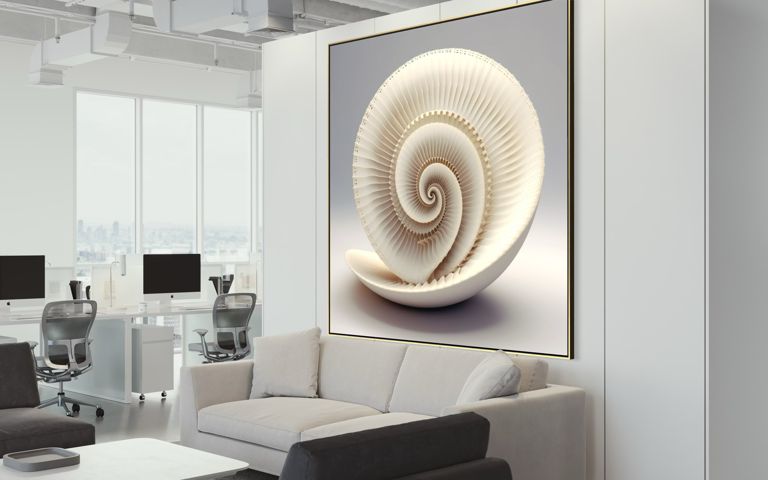


For a wall you're responsible for.
Tell me the room and what you want it to feel like. I will send three works that fit, and a mock-up of each one in place.
Write to me