JOURNAL · OBJECT
The nautilus as an object of meditation.
One curve, followed inward. Why a spiral is the oldest attention exercise there is, and how to hang one so it works.
Raul Gabriel Nagy · 24 September 2026 · 5 min read
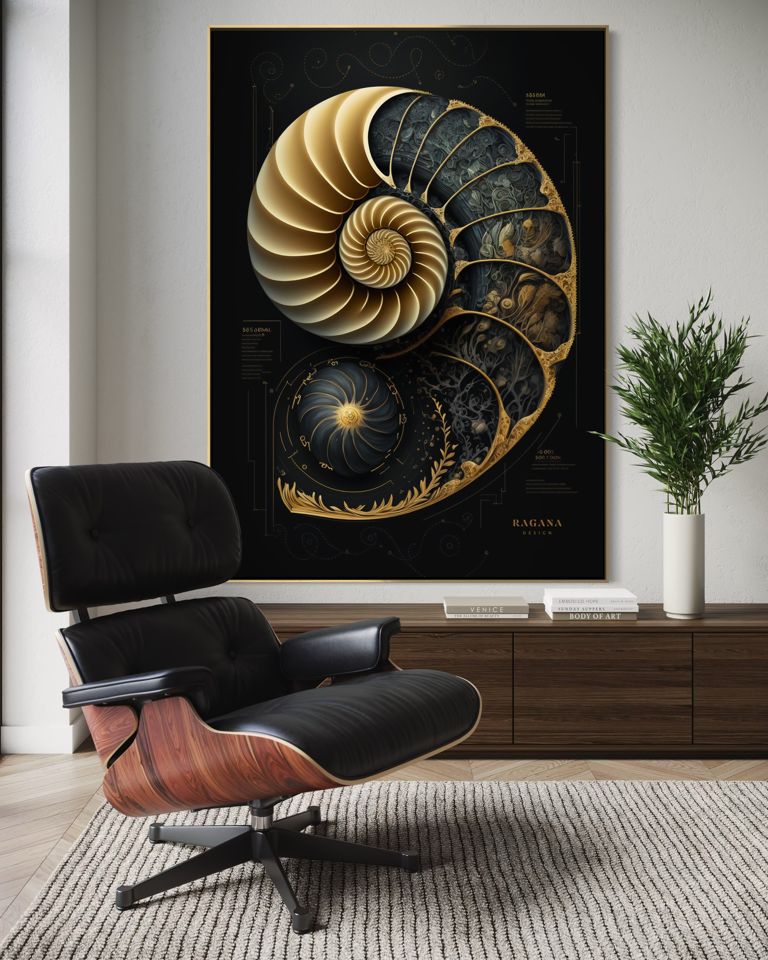
A spiral is a line that never asks you to decide where to look next. That is the whole exercise.
Most objects used for attention practice share one property: they give the eye a path with no branches. A candle flame, a single stone, the breath. A spiral is that path drawn out. You begin at the wide outer curve, and the line takes you inward, turn by turn, each turn a fixed fraction smaller than the last, until the centre — which in a true golden spiral is never reached, because the curve goes on shrinking for ever. The eye follows, slows, and at some point stops following and simply rests. There is no decision to make anywhere along the way. That absence of decision is what the practice is for.
The nautilus is the natural version of this, which is why it has been drawn and carved and set in floors for as long as people have made quiet rooms. It is not a golden spiral — I have written about the difference — but it is a smooth logarithmic spiral, and smoothness is the property that matters here. A curve with seams gives the eye small places to catch. A curve without them gives it none.
How to hang one so the practice works
Hang it where you sit, at the height of your eyes when you are seated, which is lower than you expect: about 115 cm to the centre of the work for a cushion on the floor, 125 cm for a chair. Leave the wall around it empty for at least the width of the work on each side. And choose the direction of the spiral deliberately. Most people find a curve that turns inward towards the right easier to follow with the eye; if the work is going to your left as you sit, consider its mirror.
Light it from the side, not from the front. A gold line on a dark ground is drawn to catch raking light; lit flat, it is a picture, lit from the side, it is an object.
Which works
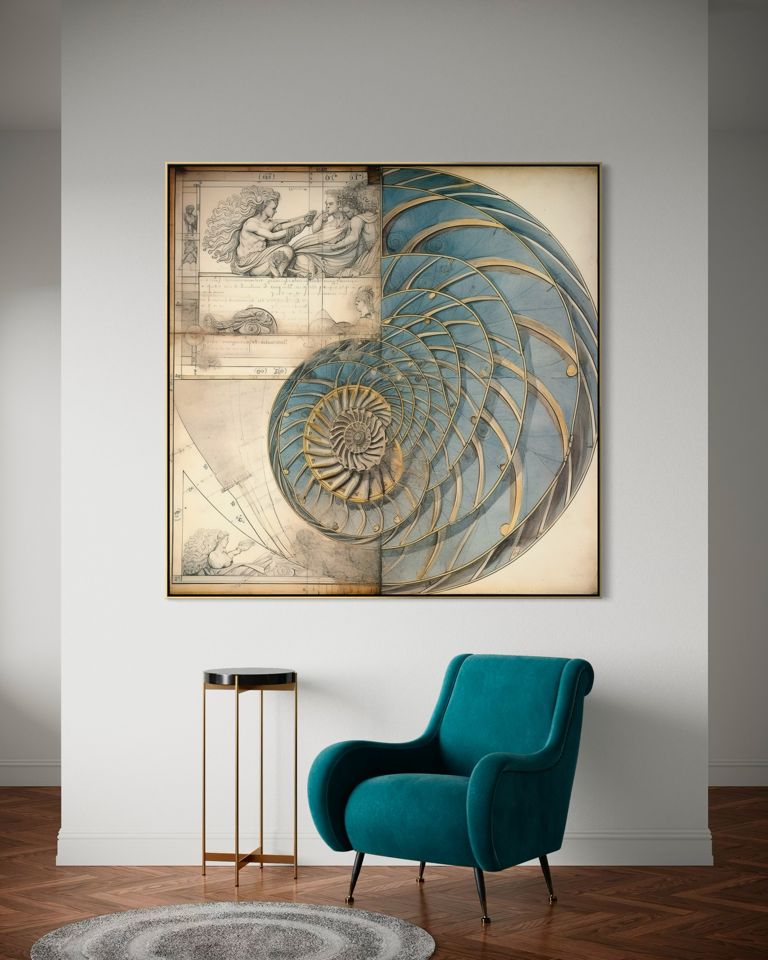
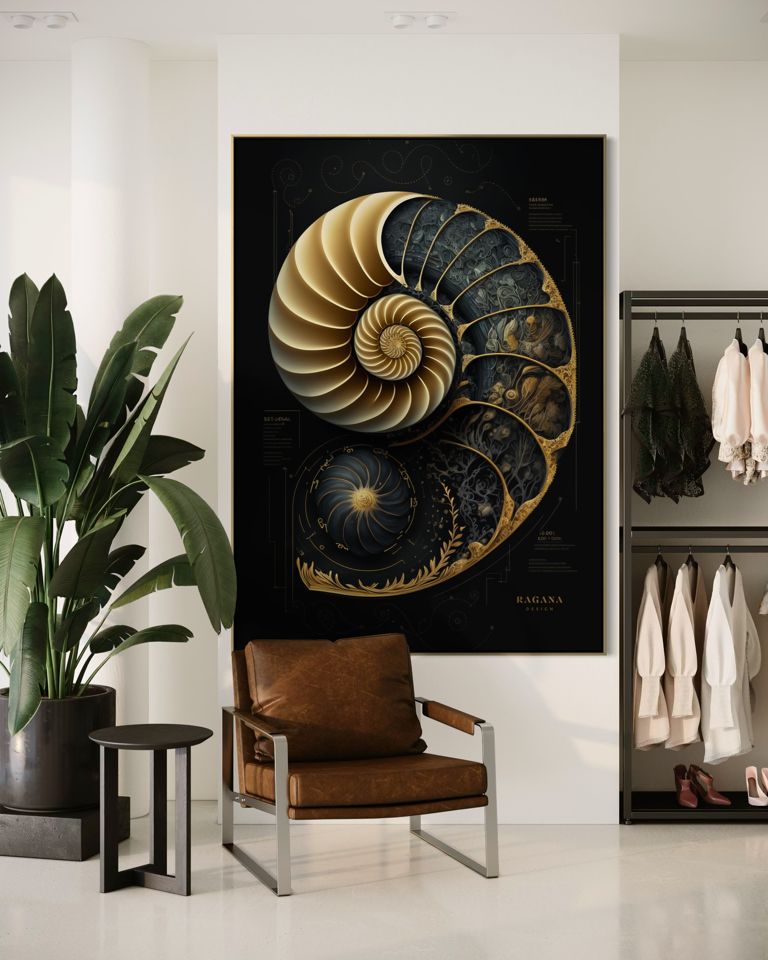
The Golden Nautilus II is the one most people mean when they ask for this: navy ground, the shell scaled in gold, the most detailed of the shells. The Codex Nautilus does the same curve in the notebook manner, with the construction lines left visible for the eye that wants something to read. Nautilus Prime is the plainest of the three and, for a room used only for sitting, probably the right one.
The centre of a golden spiral is never reached. That is not a flaw in the object. It is the object.
From the studio notes


For a wall you're responsible for.
Tell me the room and what you want it to feel like. I will send three works that fit, and a mock-up of each one in place.
Write to me