GUIDES · ARTISTS
Kandinsky, Hilma af Klint and Mondrian: the pioneers of abstract art.
Three painters, working separately in Munich, Stockholm and Paris, arrived at pictures of nothing but colour and form. All three died in 1944. Here is how each of them got there.
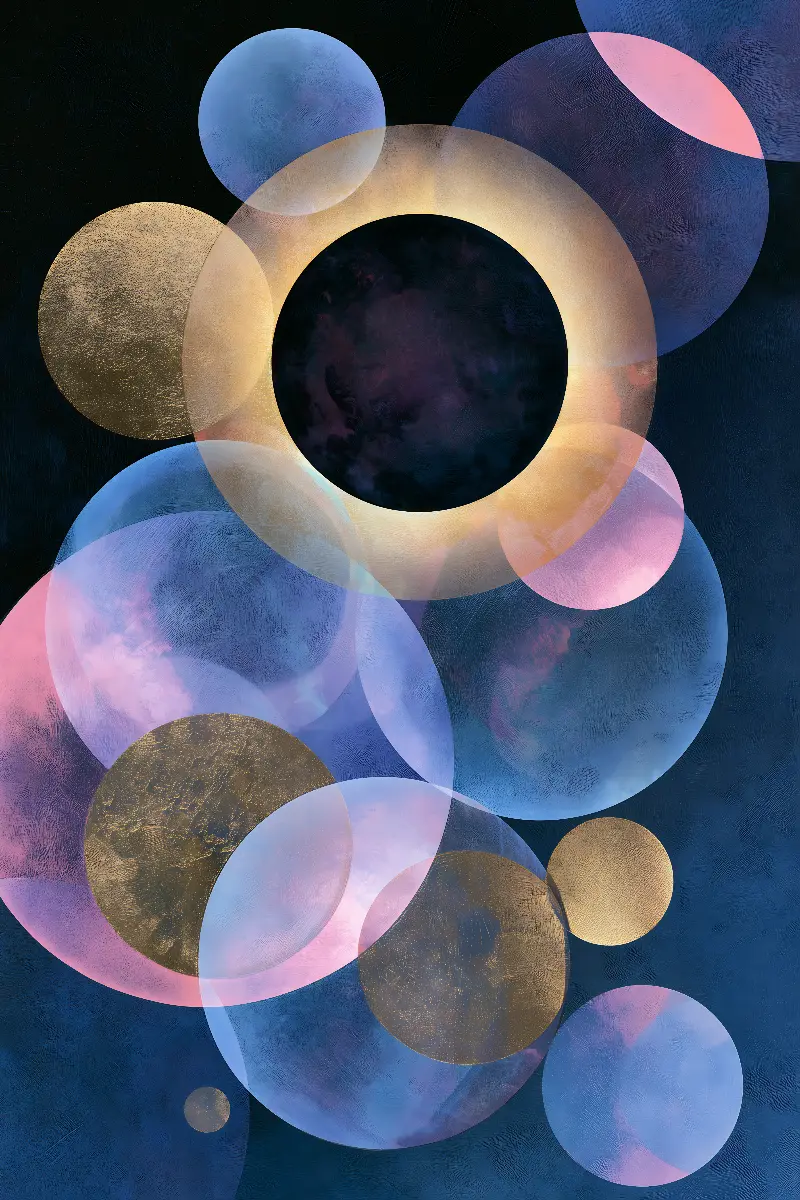
Who painted the first abstract picture?
For a long time the answer was simple: Wassily Kandinsky, around 1910–1913. Then, from the 1980s onwards, the world discovered a Swedish painter who had been making large abstract paintings since 1906 and had asked that they stay hidden until twenty years after her death. Meanwhile a Dutch painter was taking a different road, step by step, from trees to grids.
None of the three was copying the others. Each came to abstraction for their own reasons — music, the spiritual, the search for a universal order — and each left a different kind of picture.
Wassily Kandinsky: colour as music
Wassily Kandinsky (1866–1944) gave up a promising career in law in Moscow at the age of thirty and went to Munich to study painting. He was fascinated by music and seems to have experienced colours and sounds together; he named his works Improvisations and Compositions, like pieces of music. In 1911 he founded the group Der Blaue Reiter with Franz Marc, and published Concerning the Spiritual in Art, which argued that colour and form act directly on the soul, as notes do.
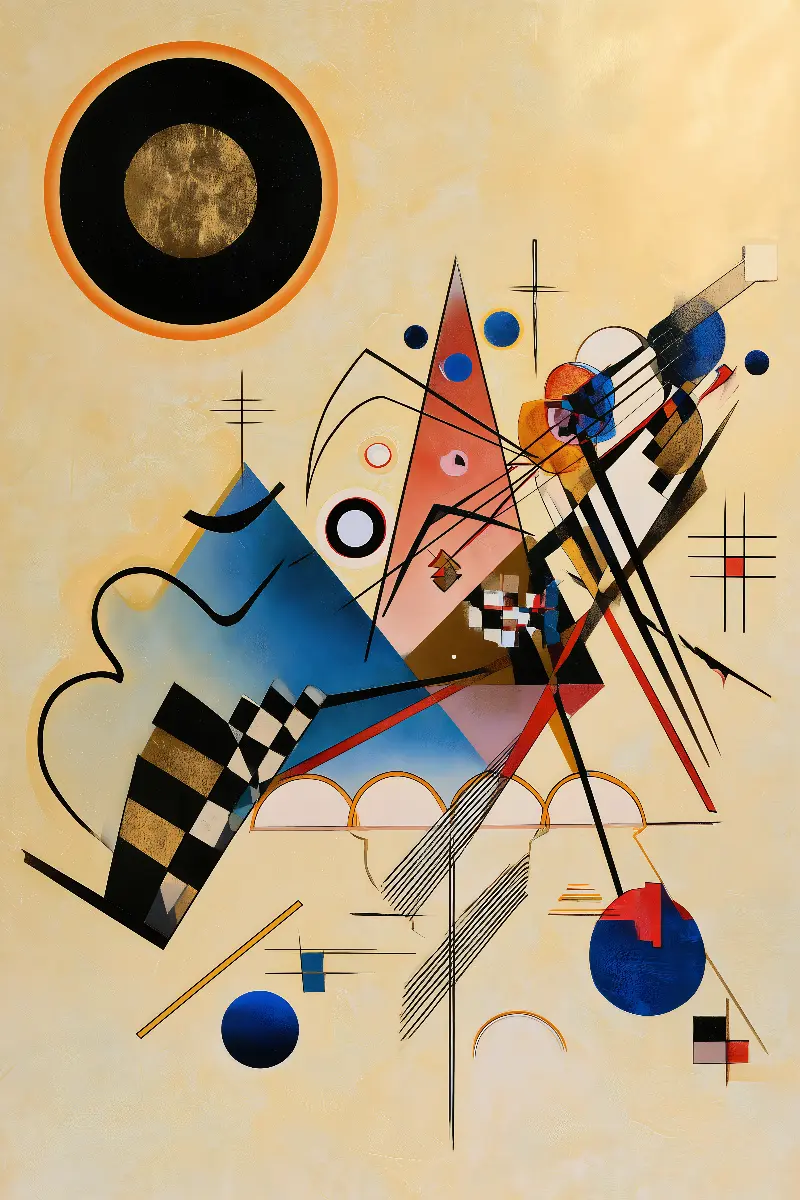
His early abstractions are wild and lyrical. At the Bauhaus, where he taught from 1922 to 1933, his work became geometric: Composition VIII (1923), a constellation of circles, triangles, lines and grids on a pale ground, which he considered one of his most important works; Yellow-Red-Blue (1925); and Several Circles (1926), in which translucent circles float in a dark space like planets. Kandinsky’s circles became his signature: for him the circle was the most cosmic of shapes.
Hilma af Klint: the secret pioneer
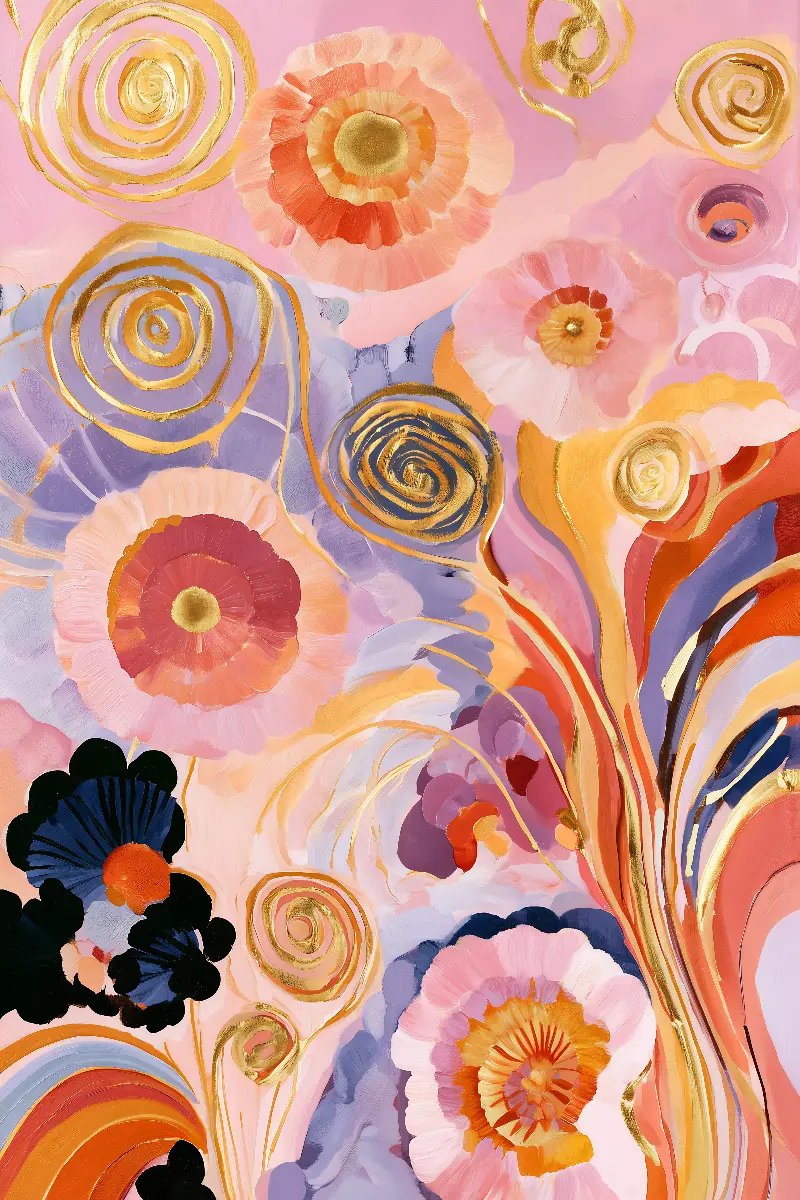
Hilma af Klint (1862–1944) trained at the Royal Academy in Stockholm and earned her living as a respected painter of landscapes and portraits. In private, with four other women in a group called The Five, she held séances and believed she was receiving instructions from spiritual guides.
From 1906 to 1915 she painted a cycle of 193 works she called The Paintings for the Temple. Among them are The Ten Largest (1907), enormous canvases about three metres high showing the four stages of human life in spirals, petals, letters and soft pinks, blues and oranges — abstract paintings years before Kandinsky’s. The cycle ends with the Altarpieces (1915), in which a golden circle sits above stepped pyramids.
She showed this work to almost no one and stipulated that it should not be exhibited until twenty years after her death. It was only widely seen from 1986; a retrospective at the Guggenheim Museum in New York in 2018–2019 became the most visited exhibition in that museum’s history.
Piet Mondrian and De Stijl
Piet Mondrian (1872–1944) began as a Dutch landscape painter of windmills, dunes and trees. A series of tree paintings around 1908–1912 shows his whole journey: the branches become curves, then a lattice of lines, until the tree has disappeared into a structure. In Paris he met cubism and pushed it further than the cubists did.
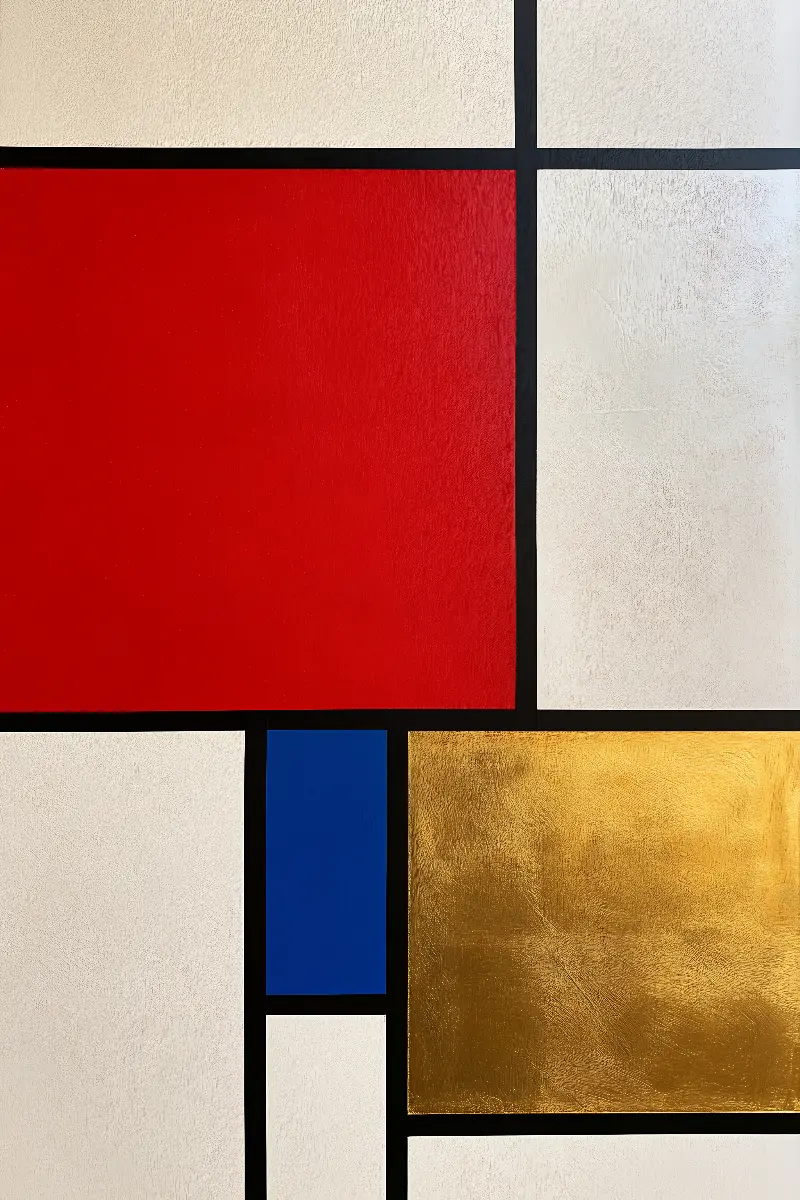
In 1917 he and Theo van Doesburg founded the magazine De Stijl (“The Style”), which gave its name to a movement of painters, architects and designers. Mondrian called his own approach Neo-Plasticism: only straight horizontal and vertical lines, the three primary colours, and black, white and grey. With those few means he looked for balance — a universal harmony behind the changing surface of the world. Composition with Red, Blue and Yellow (1930) is the classic example. In New York, where he lived from 1940, the black lines gave way to the coloured rhythms of Broadway Boogie Woogie (1942–1943).
Three roads, one destination
Kandinsky came to abstraction through music, af Klint through the spiritual, Mondrian through structure. Kandinsky’s pictures move, af Klint’s grow, Mondrian’s balance. And by a strange coincidence all three died in the same year: Mondrian in New York in February 1944, af Klint in Stockholm in October, Kandinsky near Paris in December.
All three are in the public domain today, and their works are among the most reproduced pieces of abstract art in the world.
Abstract art in gold
The Abstract Masters in Gold collection reimagines all three with raised gold leaf: Kandinsky’s Several Circles, Composition VIII and Yellow-Red-Blue as the Kandinsky set; and Hilma af Klint’s Rosettes and Altarpiece with Mondrian’s Composition in Red, Blue & Gold as the Pioneers of Abstraction set.
For the school where Kandinsky taught, read What is Bauhaus?.
Questions
Who painted the first abstract painting?
Wassily Kandinsky is traditionally credited, with works from around 1910–1913. But Hilma af Klint was already painting large abstract works in 1906–1907, which only became widely known in the 1980s.
What is Kandinsky’s Composition 8 about?
Composition VIII (1923), painted at the Bauhaus, is an arrangement of circles, triangles, lines and grids that Kandinsky saw as a visual equivalent of music. He considered it one of his most important works.
What is De Stijl?
A Dutch art and design movement founded in 1917 by Theo van Doesburg and Piet Mondrian, named after their magazine. It used only straight lines, right angles, primary colours, black and white.
Why did Hilma af Klint hide her paintings?
She believed the world was not ready to understand them and asked that her abstract works not be shown until twenty years after her death. She died in 1944; the work became widely known from 1986 onwards.
For a wall you're responsible for.
Tell me the room and what you want it to feel like. I will send three works that fit, and a mock-up of each one in place.
Write to me