GUIDES · ARTISTS
Edgar Degas and the ballet dancers.
Edgar Degas made more than a thousand pictures of dancers. Few of them show a performance. Here is why the rehearsal room fascinated him, and how he painted movement.
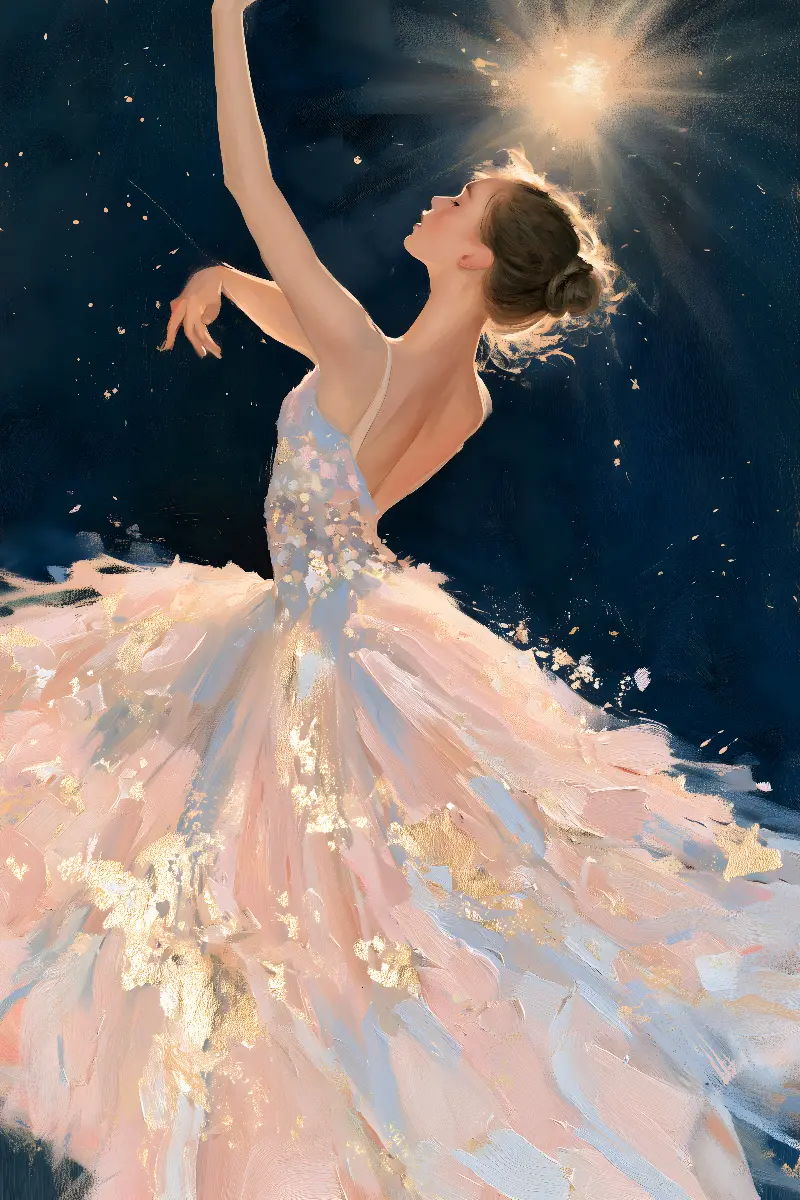
An Impressionist who disliked the label
Edgar Degas (1834–1917) came from a wealthy Paris banking family and trained in the classical tradition, copying the old masters and admiring Ingres. He exhibited in seven of the eight Impressionist exhibitions and helped organise them, yet he never liked being called an Impressionist. He preferred to call himself a realist or an independent, and he had little patience for painting outdoors: his subjects were the city, and he worked from drawings and memory in the studio.
His great subjects were modern Paris — cafés, laundresses, milliners, racecourses — and, above all, the dancers of the Paris Opéra.
Behind the scenes at the Opéra
Degas made well over a thousand paintings, pastels, drawings and sculptures of dancers. Remarkably few show a performance. Most show the rehearsal room and the wings: dancers stretching at the barre, waiting their turn, scratching a back, adjusting a shoe, yawning, listening to the ballet master. The Dance Class of the mid-1870s shows a lesson led by the old ballet master Jules Perrot, with the young dancers around him tired, bored or concentrating.
What interested him was not glamour but work: the discipline and repetition behind the effortless moment on stage, and the body in movement. Many of the young dancers, the so-called petits rats, came from poor families, and their lives were hard; Degas looked at them with a cool, observing eye rather than a sentimental one.
Strange angles, cut-off figures
Degas’s compositions can feel startlingly modern. He looks down from a box at the Opéra, places a double bass across the foreground, cuts a figure in half at the edge, leaves a large empty floor in the middle. Two influences explain much of this: Japanese prints, with their high viewpoints and cropped compositions, and photography, which he practised himself and which showed bodies caught mid-movement.
The Star (around 1878), now in the Musée d’Orsay, is one of the few stage scenes: a principal dancer seen from above, bowing in a pool of light, while in the wings behind her stand other dancers and a man in a black suit.
Pastel and the Little Dancer
From the late 1870s Degas worked more and more in pastel, sticks of pure pigment that let him draw and colour in one gesture. He layered them, steamed them, mixed them with gouache, and achieved colours of great brilliance — perfect for gauze tutus under stage lights. His late pastels of dancers in blue, orange and green are almost abstract in their colour.
He also modelled dancers in wax. The only sculpture he ever exhibited, Little Dancer Aged Fourteen, was shown in 1881 with a real fabric tutu, a satin ribbon and real hair, and shocked visitors with its realism. The bronze casts in museums today were made after his death, from the wax original.
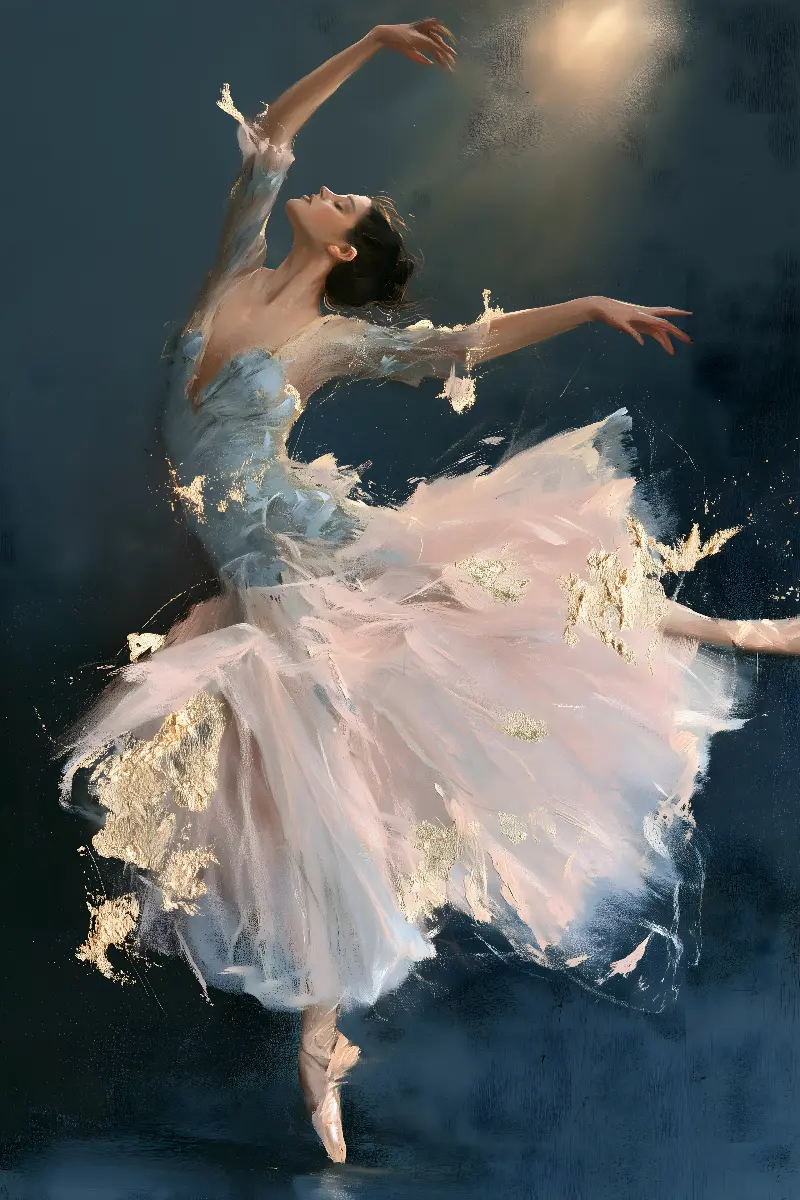
Degas in gold
Degas’s works have been in the public domain for a long time. The Pastel Masters collection reimagines his dancers with gold leaf in The Golden Ballerina and Blush Arabesque, which join a Mucha muse in the Golden Grace set.
They are a favourite for dance studios, bedrooms and dressing rooms — anywhere grace and discipline belong together.
Questions
Why did Degas paint so many ballet dancers?
He was fascinated by the human body in movement and by the work behind a performance. The Paris Opéra gave him endless subjects: rehearsals, lessons, dancers waiting and stretching. He made well over a thousand works on the theme.
Was Degas an Impressionist?
He exhibited in seven of the eight Impressionist exhibitions, but preferred to call himself a realist or independent. Unlike Monet he rarely painted outdoors, working from drawings and memory in the studio.
What is Degas’s most famous dancer?
Probably The Star (c. 1878) in the Musée d’Orsay, The Dance Class of the 1870s, and the sculpture Little Dancer Aged Fourteen, first shown in 1881.
What medium did Degas use for his dancers?
Oil paint, but above all pastel from the late 1870s onwards, often combined with gouache or monotype. He also modelled dancers in wax.
For a wall you're responsible for.
Tell me the room and what you want it to feel like. I will send three works that fit, and a mock-up of each one in place.
Write to me